

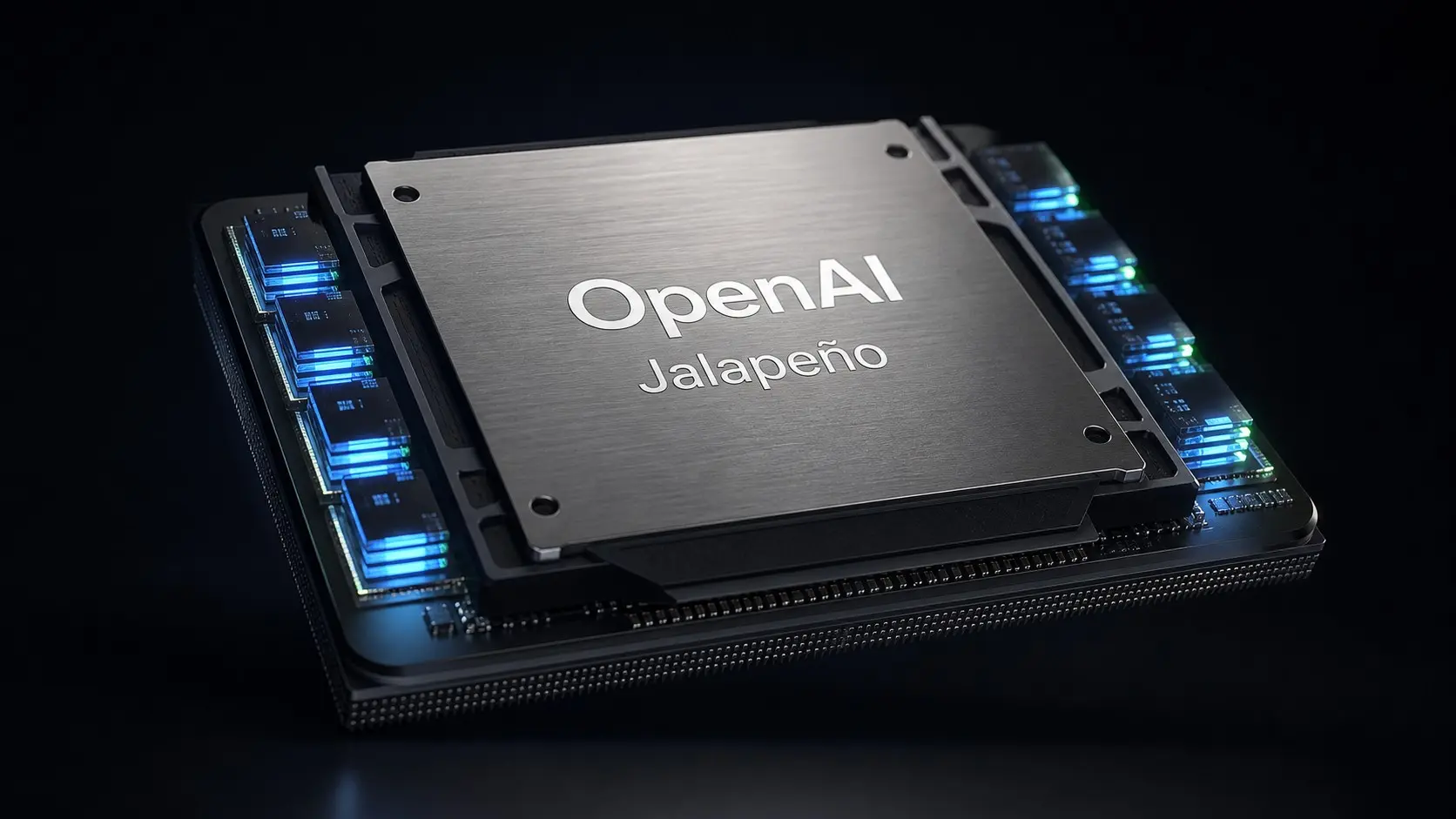
OpenAI is no longer focused solely on building cutting-edge AI models, it now wants to help power them from the ground up.
The company has officially introduced Jalapeño, its first custom AI chip, marking a significant milestone in OpenAI’s long-term infrastructure strategy. Developed in collaboration with Broadcom, the processor is designed to handle the massive computing demands behind products like ChatGPT, Codex, OpenAI’s APIs, and the next generation of AI agents.
The announcement signals a new chapter for OpenAI as it expands beyond software and into the hardware that makes modern artificial intelligence possible.
Why Is OpenAI Building Its Own AI Chip?
Training and running today’s AI models requires enormous amounts of computing power.
Until now, OpenAI has relied heavily on high-performance GPUs to support its growing ecosystem of AI products. However, as millions of users interact with ChatGPT and developers continue building with OpenAI’s APIs, the demand for faster, more efficient infrastructure continues to rise.
By designing its own chip, OpenAI can optimize hardware specifically for its AI workloads, potentially improving performance, reducing operational costs, and increasing scalability as future models become even more powerful.
Rather than depending entirely on third-party hardware, OpenAI is taking greater control over the technology stack that powers its services.
Built With Broadcom
OpenAI isn’t building Jalapeño alone.
The company partnered with Broadcom, one of the world’s leading semiconductor companies, to develop the custom processor.
Broadcom has extensive experience designing specialized chips for networking, cloud infrastructure, and AI applications. By combining Broadcom’s hardware expertise with OpenAI’s understanding of large-scale AI workloads, the partnership aims to create processors tailored specifically for modern artificial intelligence.
While detailed technical specifications haven’t been disclosed, the focus is clear: build hardware optimized for OpenAI’s expanding ecosystem.
Powering ChatGPT, Codex, APIs, and Future AI Agents
According to OpenAI, Jalapeño is designed to support a broad range of products across its platform.
These include:
- ChatGPT
- Codex
- OpenAI APIs
- Future AI agents and autonomous systems
As AI assistants become more capable and increasingly integrated into everyday workflows, the infrastructure behind them must evolve as well.
Custom hardware could allow OpenAI to deliver faster responses, improve efficiency, and better support millions of simultaneous users while preparing for the next generation of AI-powered applications.
Baca juga: Meta’s New AI Smart Glasses Could Finally Make Wearable AI Go Mainstream
Why This Matters for the AI Industry
The race to build advanced AI is no longer just about creating better models.
Increasingly, it’s also about controlling the infrastructure that powers them.
Leading AI companies are investing heavily in custom silicon to reduce dependence on off-the-shelf hardware and optimize performance for increasingly complex AI workloads. Specialized processors can improve efficiency, lower energy consumption, and enable faster deployment of new AI capabilities.
OpenAI’s move into chip development reflects a broader industry trend where software and hardware are becoming deeply interconnected.
The Bigger Picture
Artificial intelligence is entering a new phase.
Success will depend not only on smarter models but also on the infrastructure capable of supporting them at global scale. By introducing Jalapeño, OpenAI is showing that the future of AI isn’t just built with algorithms, it’s also built with purpose-designed hardware.
Although Jalapeño is still in its early stages, it represents a strategic investment in the foundation of OpenAI’s ecosystem. As demand for AI continues to grow, custom chips like Jalapeño could play a crucial role in delivering faster, more efficient, and more reliable AI experiences for users worldwide.
Baca juga: China’s “Flying Pickup Truck” Is Almost Ready—and It Could Change Cargo Delivery Forever
Follow AICurateHub for More AI Updates
Want to stay ahead of the latest breakthroughs in artificial intelligence and emerging technology?
Follow @aicuratehub on Instagram for daily AI news, product launches, and industry insights. Visit aicuratehub.com/ to explore more breaking news, expert analysis, and practical guides covering everything happening in the world of AI and technology.