
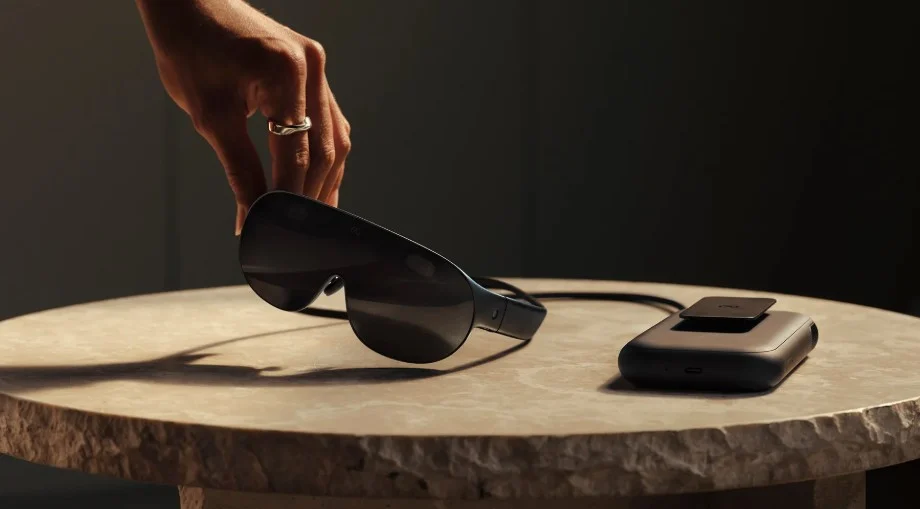

Meta is preparing to usher in a new era of immersive spatial computing technology.
The company’s upcoming VR Glasses aim to eliminate bulky head-mounted displays entirely.
Engineers have successfully condensed high-performance hardware components into a remarkably sleek, lightweight form factor.
This landmark development promises to make immersive digital experiences accessible, comfortable, and stylish for mainstream consumers worldwide.
Breaking Free From Traditional Headset Constraints
For years, bulky plastic headsets have restricted long-term user comfort and mainstream virtual reality adoption.
Heavy devices often cause neck strain, facial discomfort, and physical fatigue during extended work or gaming sessions.
Meta addresses these physical ergonomic challenges directly by scaling structural hardware components down significantly.
Transitioning from heavy headsets toward lightweight eyewear marks a massive turning point for modern spatial computing.
Achieving Extreme Portability with Ultra-Lightweight Engineering
Weighing approximately 100 grams, these VR Glasses offer unprecedented spatial wearability across the wearable technology market.
Achieving this featherweight profile required revolutionary advancements in thermal management, optical engineering, and lightweight composite materials.
The ultra-light chassis allows users to wear the device comfortably for hours without suffering physical fatigue.
Lightweight construction makes spatial computing feel completely natural during daily personal, creative, and professional activities.
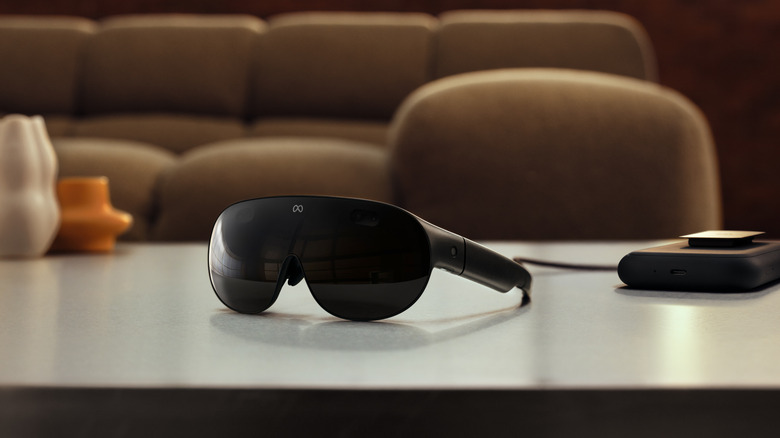
Visual Excellence Through 5K Micro-OLED Panels
The VR Glasses incorporate cutting-edge 5K Micro-OLED displays delivering extraordinary visual fidelity and vibrant color saturation.
Micro-OLED technology packs millions of microscopic pixels into an extremely compact display surface area.
Users experience razor-sharp text render, deep contrast ratios, and lifelike virtual environments without frustrating screen-door pixelation effects.
This optical leap ensures that virtual imagery appears indistinguishable from real-world physical surroundings.
Natural Interaction via Eye and Hand Tracking
Navigating virtual environments becomes entirely intuitive thanks to embedded real-time eye tracking and precise hand tracking systems.
Advanced infrared sensor arrays track subtle eye movements instantly to select onscreen menus and interactive elements.
Simultaneously, high-precision cameras map natural hand gestures, eliminating the absolute necessity for bulky physical handheld controllers.
Controlling digital spatial interfaces directly with natural human gestures creates a seamless, friction-free user interface.
Deep System Integration of On-Device Meta AI
Integrated Meta AI acts as an intelligent spatial co-pilot throughout your immersive virtual reality journeys.
The built-in assistant processes contextual voice commands instantly to answer queries, generate assets, and assist complex workflows.
By analyzing your immediate visual surroundings, the AI delivers personalized recommendations and real-time informational overlays effortlessly.
Fusing conversational artificial intelligence directly into wearable hardware creates a truly proactive personal digital assistant.
Shifting Consumer Workflows and Daily Productivity
Replacing bulky headsets with lightweight glasses transforms how professionals engage with digital workspaces and creative software.
Knowledge workers can deploy customizable multi-monitor virtual desktop arrangements anywhere without carrying heavy hardware equipment.
Remote team collaboration feels increasingly natural as lifelike spatial avatars share interactive virtual conference spaces effortlessly.
Merging high-resolution optics with lightweight comfort allows spatial computing to enhance daily professional productivity seamlessly.
Commercial Timeline and Market Expectations
Meta plans to launch these revolutionary VR Glasses commercially in Spring 2027.
The scheduled rollout gives developers adequate time to build optimized software applications tailored for the new form factor.
Industry analysts anticipate that lightweight spatial glasses will accelerate mainstream consumer adoption faster than legacy headsets.
Meta’s aggressive innovation cadence reinforces its strategic leadership position across the competitive virtual reality sector.
The Horizon of Spatial Wearable Computing
The arrival of 100g VR Glasses signals a permanent shift toward ambient, unobtrusive spatial computing technologies.
As miniaturization techniques continue advancing, spatial eyewear will gradually displace conventional smartphones and desktop monitors.
Combining high-resolution Micro-OLED displays, natural gesture controls, and contextual artificial intelligence creates endless possibilities.
Meta is successfully building the foundation for how humanity will interact with digital information moving forward.
Follow us @aicuratehub on Instagram for daily AI news, creative projects, and emerging technology.
Visit AICurateHub.com for more updates on artificial intelligence, robotics, and the future of digital creativity.