
What if creating lifelike human movement was as easy as typing a simple prompt?
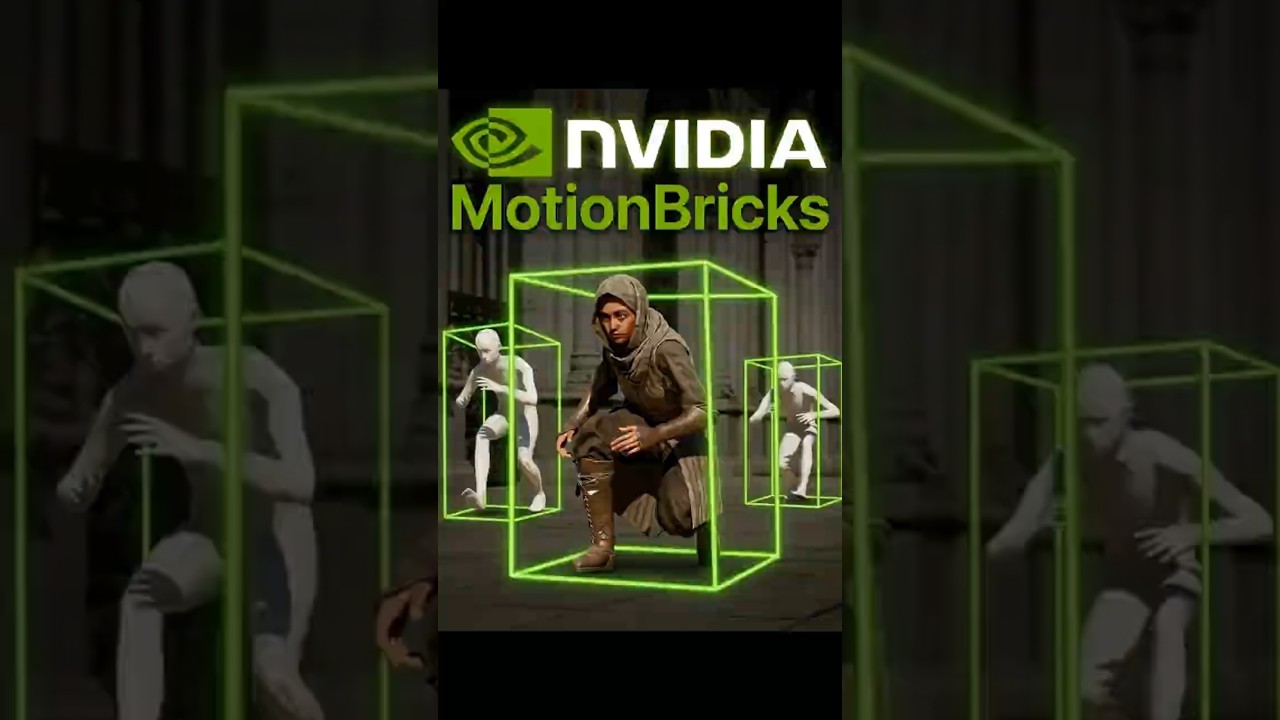
That’s the idea behind MotionBricks, NVIDIA’s latest AI innovation designed to generate realistic human motion with impressive speed and accuracy. The company recently unveiled the technology, and it’s already drawing attention from developers, animators, and robotics researchers alike.
While generative AI has transformed text, images, and video over the past few years, realistic character movement has remained one of the hardest challenges to solve. MotionBricks aims to change that.
An AI That Understands How Humans Move
Unlike traditional animation tools that rely on painstaking manual work or motion capture sessions, MotionBricks can generate natural-looking movement from simple instructions.
The model was trained using more than 350,000 real-world motion clips, allowing it to learn how people walk, run, maintain balance, shift their weight, and interact with their surroundings.
Instead of replaying pre-recorded animations, the AI predicts how a human body should move based on the requested action. The result is movement that appears fluid, believable, and responsive to different situations.
This could dramatically reduce the amount of time required to create animations for games, films, virtual worlds, and digital avatars.
Built for Incredible Speed
One of MotionBricks’ most impressive technical achievements is its performance.
According to NVIDIA, the system can run at up to 15,000 frames per second (FPS), far beyond the frame rates required for gaming or real-time graphics.
That speed allows developers and researchers to generate, test, and refine complex movements almost instantly. Faster processing also means AI-powered characters and robots can react more naturally in dynamic environments without noticeable delays.
For robotics, speed isn’t just about performance, it’s about safety and responsiveness.
Why It Matters for Humanoid Robots
Perhaps the most exciting application of MotionBricks goes beyond animation.
NVIDIA says the technology is already helping train humanoid robots by teaching them how humans naturally move and interact with the physical world.
Walking on uneven ground, balancing after a push, reaching for an object, or navigating around obstacles all require countless micro-adjustments. MotionBricks enables robots to learn these behaviors more efficiently by generating realistic movement patterns informed by massive datasets.
As humanoid robotics continues to advance, AI systems like MotionBricks could play a key role in making robots more adaptable, stable, and capable of working alongside humans in everyday environments.
Baca juga: OpenAI Codex Record & Replay Turns Repetitive Tasks Into AI Skills
A Step Toward Smarter AI-Powered Animation
The launch of MotionBricks also highlights a broader trend in AI development: moving beyond content generation toward understanding the physical world.
Instead of simply creating images or videos, new AI models are beginning to simulate physics, movement, and human behavior with increasing accuracy.
For game developers, this could mean more realistic NPCs and faster production pipelines. For filmmakers and animation studios, it could reduce the need for expensive motion capture workflows. And for robotics companies, it may accelerate the development of machines that move more naturally in real-world settings.
Although MotionBricks is still an emerging technology, it demonstrates how AI is expanding into areas that were once considered uniquely human.
The Bigger Picture
AI is no longer limited to generating text or artwork, it is increasingly learning how the real world works.
MotionBricks is another example of NVIDIA pushing AI beyond digital creativity and into physical intelligence. Whether it ultimately transforms animation, robotics, or both, one thing is clear: the gap between virtual movement and real human motion is getting smaller.
As AI continues to evolve, technologies like MotionBricks could become foundational tools for the next generation of interactive experiences and intelligent machines.
Baca juga: China’s “Flying Pickup Truck” Is Almost Ready—and It Could Change Cargo Delivery Forever
Follow AICurateHub for More AI Updates
Want to stay ahead of the latest breakthroughs in artificial intelligence and emerging technology?
Follow @aicuratehub on Instagram for daily AI news, product launches, and industry insights. You can also visit aicuratehub.com/ to explore more stories, practical guides, and the latest developments shaping the future of AI and technology.