
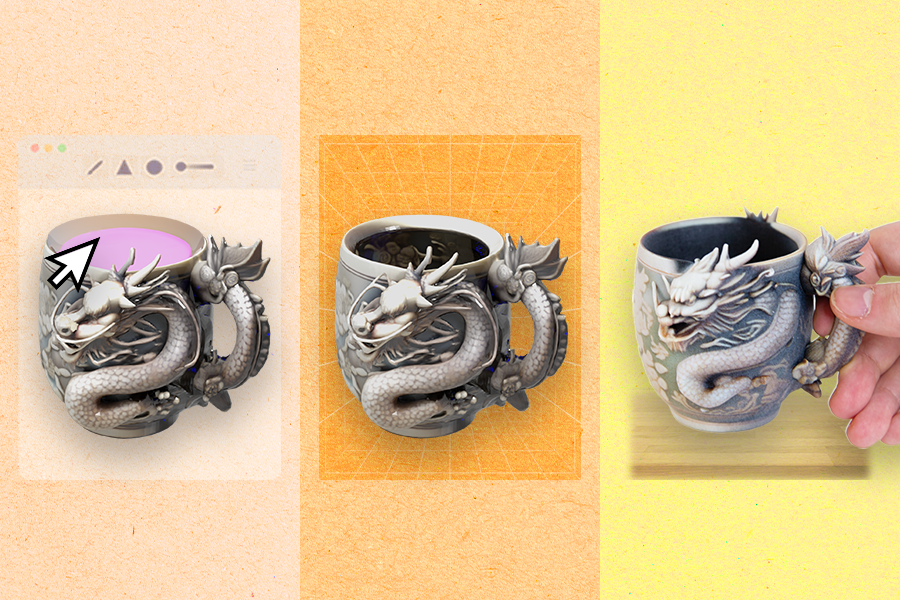

Generative artificial intelligence models excel at creating visually stunning digital concepts from simple text instructions.
However, traditional AI 3D generators understand how objects look rather than how they function in reality.
This fundamental limitation means a freshly printed AI coffee mug often fails to hold liquid properly.
Introducing InstructMesh by MIT CSAIL and Google
Researchers at MIT’s Computer Science and Artificial Intelligence Laboratory have introduced a powerful solution called InstructMesh.
Developed alongside collaborators from Google and Northeastern University, the software revolutionizes interactive 3D model fabrication.
The tool allows creators to highlight flawed blueprint sections and refine them seamlessly before 3D printing begins.
Uncovering Structural Flaws in Standard AI 3D Models
Initial testing revealed startling statistics regarding the reliability of raw, unedited generative 3D outputs.
Nearly 80 percent of models generated from popular platform Thingiverse designs contained hidden structural flaws.
Without intervention, these impractical digital blueprints would fail completely when sent to physical 3D printers.
Pairing Microsoft TRELLIS with Advanced Language Models
InstructMesh achieves its remarkable flexibility by combining Microsoft’s TRELLIS framework with OpenAI’s GPT-4.
TRELLIS specializes in generating high-fidelity 3D assets from text and image prompts with incredible speed.
Meanwhile, GPT-4 provides the advanced logical reasoning required to interpret user instructions and structural corrections accurately.
Combining these two technologies allows users to manipulate visual geometry through simple, conversational dialogue.
Empowering Novices to Spot and Fix Design Errors
The research team tested the software with everyday users who lacked formal 3D modeling experience.
Remarkably, these novice designers successfully identified and corrected structural flaws approximately 90 percent of the time.
Intuitive interactive sliders and natural language controls replaced complex, intimidating CAD software interfaces entirely.
What these newcomers lacked in technical training, they easily made up for in basic human intuition.
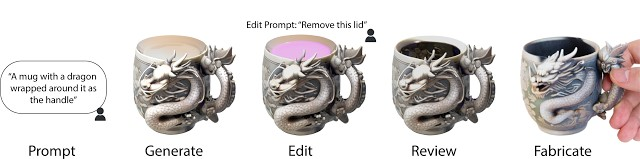
Crafting Creative Household Items and Robotic Enclosures
Researchers used the tool to fabricate imaginative objects, including dragon mugs, shell whistles, and butterfly glasses.
The software produced a mug enveloped by a dragon, with its tail forming the handle.
They also designed functional robotic casings, such as a colorful shrimp-inspired bristle bot housing a wireless motor.
When powered on, this small robotic creature slides across surfaces smoothly like a traditional wind-up toy.
Personalized Medical Devices and Custom Accessories
Getting even more creative, researchers used the program to fabricate a personalized medical knee brace.
The brace featured a denim texture designed to match the patient’s favorite pair of jeans seamlessly.
Additionally, the software produced an octopus-inspired drink dispenser that pours liquids into multiple cups at once.
These diverse examples demonstrate the endless practical applications possible when generative AI meets functional fabrication.
Follow AI Curate Hub for Ethical Tech News
Understanding how artificial intelligence impacts human culture, digital manufacturing, and design policy remains critical.
Navigating these fast-moving technological shifts requires staying informed about emerging engineering breakthroughs and tools daily.
Follow @aicuratehub across social media platforms for timely updates, expert commentary, and visual content summaries.
Visit aicuratehub.com today to explore curated insights on engineering innovations, generative models, and future technologies.