


Germany signed an agreement with technology giant NVIDIA to accelerate physical artificial intelligence development across industrial sectors.
The initiative aims to build physical AI models powering autonomous vehicles, smart factories, and robotics systems.
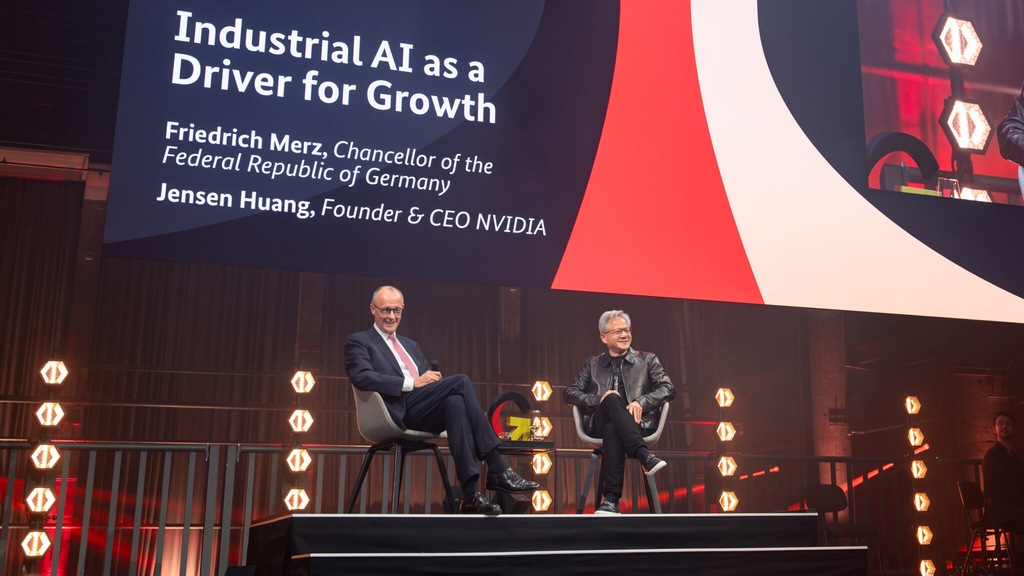
The formal agreement was signed during a high-profile summit event held in Berlin on October 19.
German Chancellor Friedrich Merz appeared alongside NVIDIA CEO Jensen Huang to announce the strategic national partnership.
Defining the Scope and Power of Physical AI
Physical artificial intelligence represents software systems capable of understanding, simulating, and interacting with real-world physical environments.
Unlike pure conversational models, physical AI integrates advanced sensor perception, spatial reasoning, and dynamic physics simulations.
These specialized systems allow autonomous machinery and industrial robots to operate safely alongside human workers.
Deploying spatial intelligence transforms traditional factory production lines into highly adaptable, automated manufacturing hubs.
Leveraging German Manufacturing Data and Industrial Expertise
Germany possesses an extensive legacy of industrial engineering expertise, mechanical precision, and specialized factory production knowledge.
NVIDIA CEO Jensen Huang highlighted that proprietary manufacturing data remains Germany’s greatest national economic resource.
Using this rich operational data allows local engineers to train specialized physical models tailored to complex heavy machinery.
Digitizing hardware manufacturing processes helps legacy companies modernize production without losing foundational engineering knowledge.
Empowering the German Mittelstand for Future Growth
The collaboration specifically targets Germany’s famous Mittelstand, the network of small and medium specialized manufacturing enterprises.
Chancellor Merz encouraged domestic business leaders to open their datasets to implement artificial intelligence tools.
Integrating AI models helps specialized suppliers optimize complex supply chains and automate manual quality control testing.
Lowering technological adoption barriers allows mid-sized factories to remain competitive against rapid global industrial competition.
Expanding NVIDIA Investments in European Technology Startups
NVIDIA announced planned strategic investments in German technology startups to support the broader regional ecosystem.
Backing extends to robotics developer Agile Robots, medical tech provider Avelios, audio firm Mirelo, and Reflex Aerospace.
These targeted investments form part of NVIDIA’s broader commitment approaching ten billion dollars across European institutions.
Fostering local tech ecosystems accelerates the commercial deployment of physical AI solutions across diverse European markets.
Transforming Smart Factories and Autonomous Vehicles
Automotive manufacturers and heavy equipment makers stand to gain immediate operational advantages from physical AI models.
Smart factories will utilize real-time spatial digital twins to simulate manufacturing changes before altering physical assembly lines.
Autonomous vehicles and delivery bots will navigate complex urban environments using more reliable, physics-aware intelligence.
Automating physical labor tasks addresses ongoing skilled worker shortages while improving workplace safety standards significantly.
Re-Engineering Industrial Competitive Advantages in Europe
German leaders view artificial intelligence integration as a vital tool for re-engineering the national economic framework.
Combining heavy hardware manufacturing with modern computing infrastructure positions Europe as a leader in physical automation.
NVIDIA’s specialized chips and simulation platforms provide the computational backbone required to train complex industrial models.
Establishing sovereign physical models ensures European manufacturers retain ownership over their critical operational data.
Overcoming Infrastructure and Data Integration Challenges
Deploying physical AI models across legacy industrial plants requires significant capital investment and software infrastructure upgrades.
Factories must install high-speed sensor networks and edge computing hardware to process real-time environmental data.
Ensuring strict cybersecurity protections and data privacy compliance remains essential when connecting industrial machinery online.
Overcoming these operational integration challenges will determine how quickly German enterprises realize actual productivity gains.
The Strategic Importance of Public-Private AI Collaborations
Public-private partnerships between national governments and leading technology companies provide essential blueprints for global AI adoption.
Sovereign state backing gives industrial firms confidence to invest heavily in next-generation automated software tools.
Simultaneously, technology providers gain direct access to real-world industrial data needed to refine physical simulation platforms.
This collaborative model establishes a powerful precedent for other manufacturing nations modernizing their industrial bases.
Follow AI Curate Hub for Global Tech News
Understanding how physical artificial intelligence impacts global manufacturing, corporate policy, and robotics remains critical for business leaders.
Navigating rapid industrial shifts requires staying informed about emerging hardware partnerships, software models, and policy updates daily.
Follow @AICurateHub across social media platforms for timely news coverage, expert analysis, and visual content updates.
Visit aicuratehub.com today to explore deep dives into industrial AI, autonomous robotics, and emerging technology trends.