

Japan is investing in AI infrastructure with a planned $15 billion data center near Tokyo. JERA, Dell Technologies, and RHAELM aim to develop a facility with 400 megawatts (MW) of power capacity. Operations are targeted to begin in phases in 2028.
A Major Investment in Japan’s AI Infrastructure
The project aims to meet growing demand for AI computing. Large AI models require powerful hardware, advanced cooling, and reliable electricity.
As a result, expanding domestic data center capacity could strengthen Japan’s position in the global AI industry. However, the project still depends on successful development and implementation.
Why JERA, Dell, and RHAELM Matter
Each company brings different expertise to the project. JERA contributes energy infrastructure, while Dell Technologies provides AI computing solutions. Meanwhile, RHAELM is involved in developing the facility.
Together, the companies combine power generation, computing hardware, and data center development. This approach reflects the growing importance of electricity in AI infrastructure planning.
How Direct Power Supply Could Reduce Delays
The planned facility will connect directly to a nearby power generation site. This could help reduce delays caused by grid connections and infrastructure upgrades.
However, the project will still need regulatory approvals, reliable backup systems, and stable power delivery. In addition, its environmental impact will depend on the electricity sources and energy management practices used.
Ultimately, the project highlights how reliable energy supplies are becoming essential to the expansion of AI infrastructure.
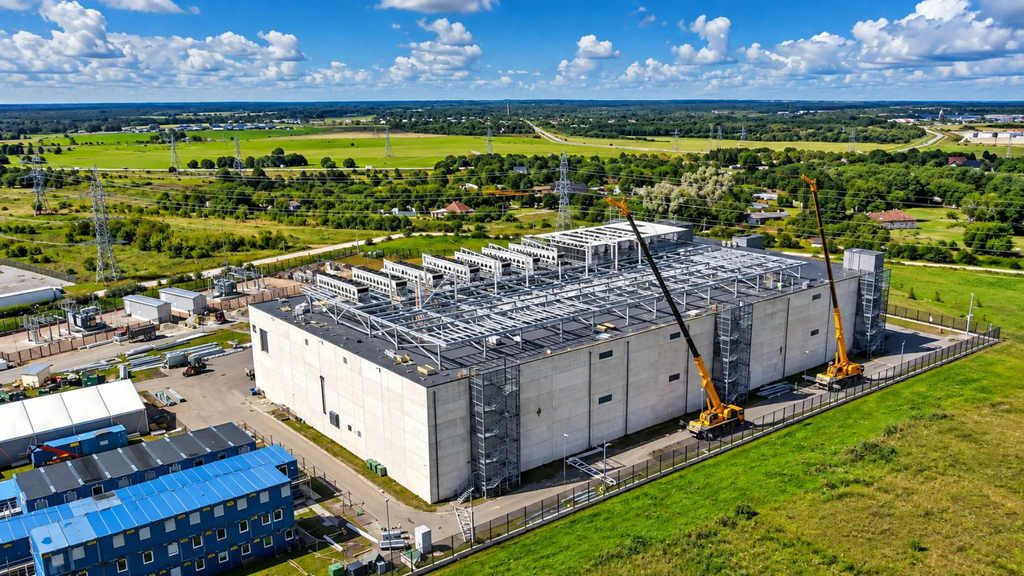
Why the Project Matters for the Global AI Race
The proposed development comes as countries and technology companies compete to establish the computing infrastructure needed for increasingly advanced AI systems.
Data centers are becoming strategic assets because they enable companies to train models, process information, host cloud services, and deliver AI applications at scale.
For Japan, expanding domestic computing capacity could help support local enterprises, research institutions, and technology developers.
It could also contribute to the country’s broader digital transformation by making additional computing resources available within its own infrastructure ecosystem.
The project also illustrates a critical shift in data center planning. Access to electricity is becoming just as important as access to land, hardware, and network connectivity. As AI workloads grow, developers must consider how power generation, cooling, and computing systems can operate together efficiently.
What Happens Next?
The project targets a 2028 start, requiring years of meticulous planning, construction, infrastructure integration, and operational preparation.
Success hinges on seamless partner coordination and satisfying strict technical and local regulatory requirements.
Upcoming technical details will clarify the facility’s exact long-term role within Japan’s evolving AI ecosystem.
Until fully built, the reported $15 billion budget and 400MW capacity represent planned development targets.
Japan nearly reflects the Growing AI and Energy Infrastructure
Japan’s planned $15 billion AI data center near Tokyo reflects the growing connection between artificial intelligence and energy infrastructure.
With JERA, Dell, and RHAELM involved, the proposed 400MW facility aims to address rising computing demand while using a direct connection to a neighboring power plant to potentially reduce grid related delays.
If delivered as planned, the project could become an important addition to Japan’s AI infrastructure as the country prepares for the next phase of digital growth.
For more updates on artificial intelligence, emerging technologies, and the latest developments shaping the digital world, follow @aicuratehub on Instagram and visit aicuratehub.com.