
Artificial intelligence processing traditionally relies on cloud data centers to compute complex conversational and visual tasks.
However, modern robotics requires low-latency, real-time responses that cloud connectivity cannot always reliably deliver.
NVIDIA is solving this challenge by releasing a compact open model called Nemotron 3.5 Bolt E4B.
This model enables interactive robots and local digital assistants to talk, perceive, and execute actions entirely offline.
Compact Architecture Designed for Edge Hardware
Running sophisticated artificial intelligence models on low-power devices historically presented severe hardware and memory constraints.
Nemotron 3.5 Bolt E4B is specifically engineered to overcome these computational resource limitations efficiently.
The model handles fluid conversational dialogue and complex tool orchestration within highly constrained memory environments.
Optimizing model architecture allows developers to deploy high-performance intelligence directly onto affordable edge hardware platforms.
Powering Interactive Robots with Reachy Mini
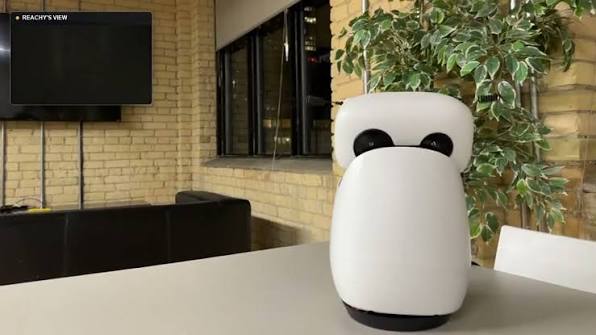
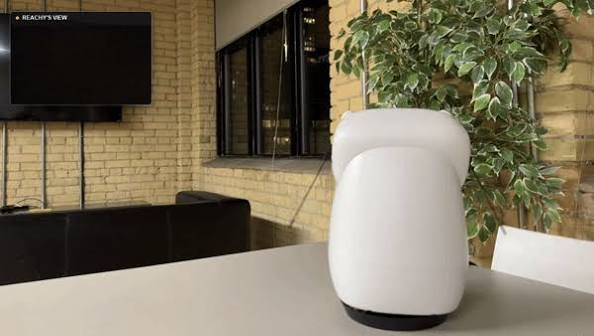
NVIDIA demonstrated the model’s capabilities using Reachy Mini, an interactive desktop robot designed for physical tasks.
During live demonstrations, Reachy Mini engaged in fluid conversations while physically interacting with nearby objects seamlessly.
Bolt managed dialogue and tool selection, while NVIDIA Cosmos processed real-time visual information from camera sensors.
Combining specialized local models creates a highly responsive, multi-modal system capable of handling complex physical interactions.
Running Fully Offline on Jetson Orin Nano
The entire technical setup operated locally on an NVIDIA Jetson Orin Nano featuring just 8GB memory.
Operating completely offline eliminates dependence on external cloud servers, reducing latency and network reliance significantly.
Local processing ensures instant response times, which are critical for physical safety during human-robot interactions.
Demonstrating high-level multi-modal intelligence on compact hardware marks a major technological milestone for edge computing.
Enhancing Privacy and Data Security at the Edge
Processing data locally offers massive privacy and cybersecurity benefits for enterprise, medical, and home environments.
Sensitive audio recordings and real-time video feeds remain entirely confined within the physical device local memory.
User data is never transmitted across public networks or stored in third-party cloud data centers.
Strict local data containment reassures privacy-conscious consumers while satisfying strict enterprise security compliance requirements.
Transforming Smart Assistants and Embedded Devices
The release of small open models opens new horizons for embedded hardware and consumer electronics.
Home appliances, industrial tools, and personal assistants can now incorporate natural conversational interfaces cost-effectively.
Devices can execute user commands instantly without experiencing network lag or server downtime interruptions.
Local intelligence makes smart technology more reliable, private, and functional across remote offline locations worldwide.
Empowering Independent Developers and Researchers
Providing open access to compact models democratizes advanced robotics research for independent developers worldwide.
Engineers no longer require massive cloud infrastructure budgets to build interactive, tool-using robotic applications.
Makers and academic institutions can rapidly prototype custom physical AI implementations using affordable hardware components.
Open collaboration accelerates innovation, bringing practical autonomous assistant solutions to commercial markets faster.
The Shift Toward Modular Multi-Model Systems
NVIDIA’s demonstration highlights a growing trend toward deploying specialized, modular models together on edge systems.
Instead of relying on one massive monolithic model, smaller specialized engines handle distinct sensory tasks.
Splitting visual perception, dialogue management, and physical motor control optimizes overall computing efficiency dramatically.
This modular architecture allows developers to swap components easily without rebuilding underlying robotic control software.
The Future of Autonomous Physical Assistants
Compact local models bring humanity one step closer to practical, everyday robotic companions in homes.
As edge computing chips become more powerful, local physical AI systems will become increasingly capable.
Robots will navigate complex environments, assist with daily household chores, and provide natural companion interaction effortlessly.
NVIDIA Nemotron 3.5 Bolt E4B establishes a revolutionary foundation for the next era of robotics.
Follow AI Curate Hub for the Latest Tech News
Understanding how edge AI and robotics transform daily life is essential for staying ahead in technology.
Navigating these fast-moving technological shifts requires access to reliable news, technical breakdowns, and expert industry insights.
Follow @AICurateHub across social media platforms for timely updates, visual content summaries, and software deep dives.
Visit aicuratehub.com today to explore curated insights on artificial intelligence, edge computing, and modern robotics.