
Humanoid robots are getting better at moving through the world, but walking naturally requires more than motors and visual recognition. Robots also need to understand what happens when their feet touch the ground.
That is where PX-FOOTRIX, a foot-mounted tactile sensing system developed by PaXini, comes in. The technology is designed to help robots perceive contact and mechanical information beneath their feet, potentially improving how they respond to different surfaces and maintain balance.
What Is PX-FOOTRIX?
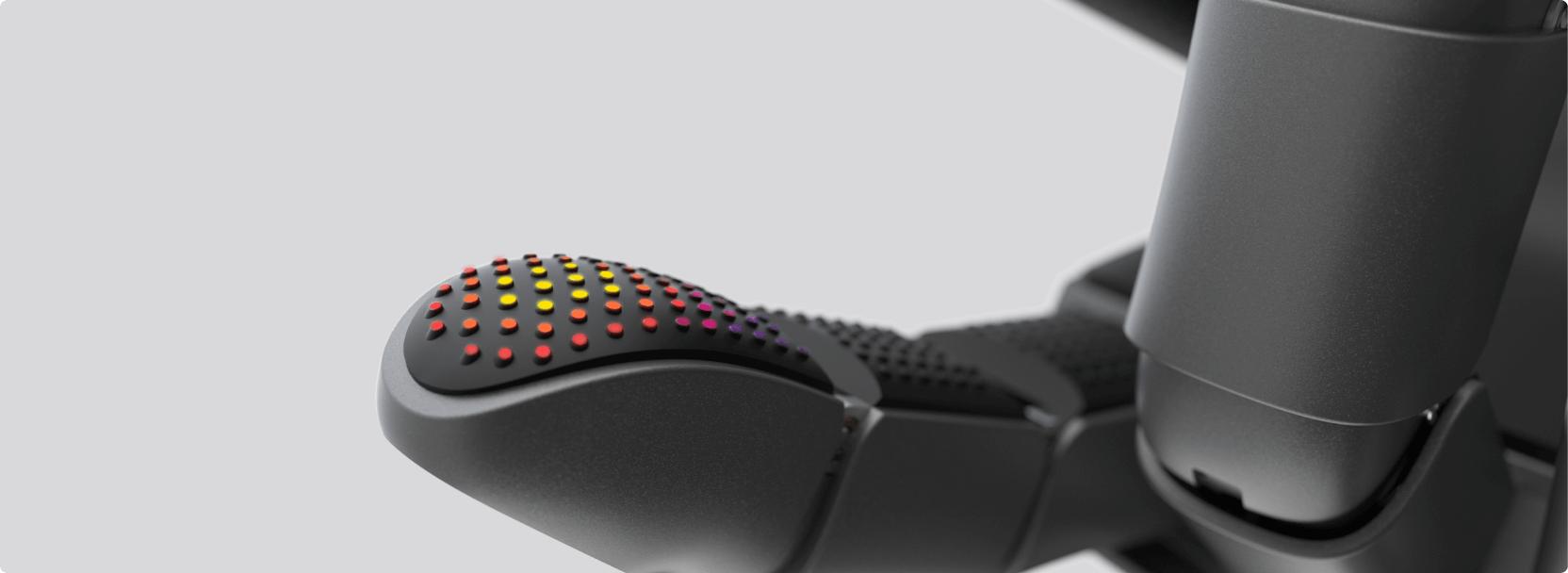
PX-FOOTRIX is a multidimensional tactile sensor designed specifically for the soles of robotic feet. Unlike a conventional shoe sole, which mainly provides physical contact with the ground, a tactile sensing system can capture information about the forces and contact conditions experienced during movement.
PaXini describes PX-FOOTRIX as a multidimensional plantar tactile sensor. Its product information highlights a multi-point sensing design intended to capture information across the foot and distinguish between different surface characteristics.
This type of sensing could provide useful feedback to robotic systems as they interact with their surroundings.
Why Do Humanoid Robots Need Tactile Sensing?
Walking involves constant adjustments. Even humans make subtle changes to their posture and foot placement when stepping onto a slippery floor, an uneven path or a softer surface.
Humanoid robots face a similar challenge. Cameras can help identify obstacles and map the environment, but visual information alone does not directly reveal every force or contact condition at the foot-ground interface.
Foot-based tactile sensing can provide another source of information, including:
- Foot contact: Detecting when and where the foot interacts with a surface.
- Pressure distribution: Understanding how contact loads are distributed across the sole.
- Terrain awareness: Gathering information that may help distinguish different surface conditions.
- Force feedback: Measuring mechanical interactions that can support movement control.
- Balance and stability: Providing feedback that control systems can use to adjust posture and gait.
The usefulness of this information depends on how well the sensor integrates with a robot’s control system and how the robot processes the incoming signals.
How Could PX-FOOTRIX Improve Robot Movement?
The potential advantage of foot-mounted tactile sensing is the ability to respond to physical contact, rather than relying on environmental perception alone.
For example, when a humanoid robot steps onto an uneven surface, information about contact and force distribution could help its control system determine whether to adjust its posture, redistribute its weight or modify its next step.
On surfaces with different levels of softness or firmness, tactile feedback could also help a robot better understand how its feet interact with the ground.
These are potential applications of foot-based tactile sensing, not a guarantee that every robot equipped with PX-FOOTRIX will automatically achieve human-like walking. Real-world performance also depends on the robot’s mechanical design, sensing software, control algorithms and testing conditions.
What Does This Mean for the Future of Humanoid Robotics?
As humanoid robots move beyond controlled demonstrations into environments with unpredictable surfaces, better physical perception could become increasingly important.
Robotic development has traditionally placed considerable emphasis on vision, manipulation and locomotion. Technologies such as PX-FOOTRIX highlight another important part of the equation: understanding physical contact from the ground up.
By combining tactile feedback with cameras, inertial sensors and motion-control systems, future robots could become better equipped to navigate complex environments and make more responsive movement adjustments.
The broader lesson is that smarter robots will need more than the ability to see and move. They will also need to sense how they interact with the physical world.
The next breakthrough in humanoid robotics might not just be in the hands — it could be under their feet.